Originally published in Spanish on ORH and co-authored with Steve Wunker
Key Ideas:
- The central brain helps coordinate action when necessary, but the “mini-brains” in the arms allow the octopus to interpret and interact with its environment. It is a living model of distributed intelligence and adaptive innovation.
- Building central command centers enabled by AI can lead to fragile organizations, where frontline teams languish and are reduced to executing orders, with little room for initiative or adaptation.
- Managers must also step in to ensure their teams do not uncritically accept AI outputs (or responses) — a key risk for junior staff — nor reflexively ignore them, which is common among those who have great confidence in their own abilities.
The “octopus organization”: reimagining work and roles for AI-driven innovation.
Faced with disruption of meteoric proportions, companies that adopt a distributed decision-making model will be better equipped to ride the waves of change and unleash innovation at all levels.
Despite years of hype about AI-driven organizational transformation, adoption plans remain largely superficial: an outer layer painted over unchanged management systems. And your employees sense this: While 80% of companies consider AI a “core” technology, only 15% believe their leaders have a clear strategy for adopting it, according to research from the Massachusetts Institute of Technology. Executives recognize that their organizations must undergo profound change to adapt, but it can be difficult to envision what an AI-native organization will look like. What responsibilities and skill sets will define leadership roles at the core, in the middle, and at the edge?
At a time when AI is accelerating the pace of market change, opening up opportunities for disruption and shortening the time from idea to launch, the most successful organizations will be those that capitalize on these advantages quickly. In many cases, this will mean empowering frontline teams to autonomously detect, assess, and act, reserving the most sensitive and ambiguous decisions for senior leaders.
These models can be called “octopus organizations” because they embrace AI to distribute decision-making instead of consolidating it, and in doing so, they unlock innovation at all levels.
Brains in their arms: a model for adaptive innovation
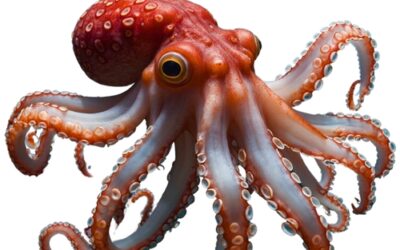
Why the term “octopus organization”? It’s a fitting metaphor for the native organization in AI because the octopus has a unique brain system. It possesses a central brain located between its eyes, but a large portion—roughly two-thirds—of its brain’s neurons are in its eight arms. This allows them to act almost independently because they have something akin to a kind of intelligence of their own. The central brain helps coordinate action when necessary, but the “mini-brains” in the arms enable the octopus to interpret and interact with its environment. It’s a living model of distributed intelligence and adaptive innovation.
An octopus-like organization builds distributed intelligence through AI systems. This enables more autonomous coordination by establishing best practices and providing readily available contextual knowledge. When used as a strategic aid, AI can also improve judgment by making issues such as scenario planning and trade-offs more manageable. Both of these changes—greater information sharing and improved judgment—can help shift responsibility downward and outward, if leaders allow it.
This distribution of decision-making rights creates the conditions for innovation to flourish where it matters most: at the customer touchpoint, in market sensing, and in operational execution. And that caveat is important. Granting distributed decision-making authority is a choice. Leaders can (and often do) use AI to maintain or consolidate authority rather than delegate it. Building centralized, AI-enabled command centers can lead to fragile organizations, where frontline teams languish and are reduced to simply executing orders, with little room for initiative or adaptation.
Consider warehouse workers fulfilling orders based on an AI algorithm, or salespeople following pre-approved scripts. These organizations may achieve efficiency gains, but they sacrifice the adaptability and innovative potential that comes from empowering those closest to customers and operations.
In contrast to the octopus, we call these organizations “ammonites”: rigid, hierarchical structures in which AI reinforces existing hierarchies. Ammonites were heavily armored cephalopods that dominated the seas until 66 million years ago, when a large meteorite impact caused their extinction (along with that of the dinosaurs). While ammonites failed to adapt to a changing environment—ironically, because of the thick shell that had protected them from previous threats—the octopus adapted and thrived.
As the “meteor-like impact” of AI disrupts long-standing practices, organizations must shed their restrictive shells and become more like an octopus, with unique, distributed intelligence powered by AI. Here’s a strategic framework for understanding how three roles—frontline staff, middle management, and senior leaders—must fundamentally transform and how AI enables these changes.
Redesign the roles of frontline staff
The accessibility of AI-mediated information allows frontline teams to make more informed decisions and stay aligned without manager intervention.
Consider the work of call center staff. In a 2023 Stanford University study, researchers found that AI helped staff acquire skills more quickly and resolve more issues. Less-skilled and new workers experienced the most significant improvements. AI can guide staff through best practices, quickly providing the information needed to address customer concerns, and, most importantly, without requiring them to consult their managers.
AI is rapidly moving from complementing human work to replacing it. According to a Gartner study, by 2029, 80% of common customer service issues are likely to be resolved by AI capable of acting autonomously. As AI automates repetitive tasks with predictable and discrete results, the responsibilities of the average employee will become more diverse and human-centered.
Let’s take the case of Stripe, a payments fintech. In March 2025, it launched its Optimized Checkout Suite (OCS), an AI-powered solution that dynamically adjusts the payment methods offered to consumers and manages fraud intervention. Based on Stripe’s extensive payments datasets ($1.4 trillion in annual volume), the OCS can determine the most relevant payment methods to display based on customer attributes and purchase details, leading to an average increase of 12% in revenue and 7% in conversion rates. The system also dynamically adjusts checkout interventions based on the likelihood of different types of risk. This reduces fraud rates by 30% with minimal impact on conversion.
The system helps customers, but it also eliminates a low-impact, low-skilled job category for Stripe’s risk team, allowing its members to focus on more nebulous cases. This change empowers frontline teams to identify process improvements, propose new approaches to emerging fraud patterns, and contribute ideas that drive product innovation—capabilities previously reserved for more senior roles.
Conclusion
Instead of turning your workforce into an army of drones, AI can leave your employees handling more variability and ambiguity than ever before. Humans will then focus on areas where they are indispensable, such as creative problem-solving, relationship building, and contextual innovation that arises from direct contact with customers and operations.
Redesigning the roles of middle management
For middle managers, the adoption of AI revolutionizes, rather than reduces, their responsibilities. Why? Because as AI tools proliferate, teams are empowered to address a greater percentage of day-to-day challenges, escalating only the most complex and mission-critical issues. And in that context, middle managers play a crucial role in helping their teams adapt.
- They need to invest more time in coaching and developing their people. This is especially important because AI can widen the performance gap between highly skilled and less experienced workers in certain contexts. Without proper support, these gaps can widen.
- Managers must also intervene to ensure their teams neither uncritically accept AI outputs (or responses)—a key risk for junior staff—nor reflexively ignore them, which is common among those who are overconfident in their own abilities. Managers must navigate these risks while enforcing the right balance between originality and productivity.
- In an AI-saturated work environment, middle managers become the first line of defense in determining whether AI tools are making the right decisions. When discrepancies arise, they must be the first to act. Finally, they must be aware of where AI outputs are based on incomplete data, which can create blind spots regarding customer insights or the actions of discreet competitors.
- Middle managers must act as custodians of AI governance and as canaries in the coal mine for structural problems within AI models. Crucially, they are becoming “innovation brokers,” identifying promising experiments within their teams, connecting ideas across silos, and advocating for viable improvements up the hierarchy.
When it transitioned from a system of fixed menu offerings to hyper-personalized meal options, HelloFresh, one of the world’s largest meal kit delivery companies, incorporated AI into both its software and manufacturing systems to predict necessary supplies based on demand forecasts. The manager’s role shifted from manually creating plans to overseeing the models’ outputs with a “trust but verify” approach, freeing up time to train people and resolve exceptions instead of reconciling spreadsheet cells.
HelloFresh’s middle managers, once renowned for their planning prowess, now excel at safeguarding models. They validate recommendations, escalate issues, train teams, and institutionalize learning. This shift has also freed them to identify opportunities for innovation and operational improvements that would have remained hidden when they were buried in spreadsheet planning.
Conclusion
According to McKinsey & Company, middle managers currently spend only about 25% of their time directly supervising and training their team members. The rest is dedicated to administration, advocacy, and alignment. In an octopus-like organization, these proportions can be reversed because, far from regressing, the role of middle managers undergoes a fundamental shift: they become less involved in controlling the flow of information and more involved in cultivating the conditions for innovation to emerge from empowered teams.
Redesigning senior leadership roles
Senior leaders in more distributed organizations can shift from being commanders to being choreographers; they can stop acting as the “central brain” and instead encourage the nearest and most qualified person (the “arms” in our octopus example) to tackle challenges; they can foster a culture of experimentation and local initiative, being intentional about the decisions and processes they continue to manage directly.
- This distinction is key because, ironically, in the age of AI, senior leaders will increasingly have to make decisions where data is scarce. For example: Do you focus on reinforcing what works now, or do you invest in a new, risky initiative? Questions like these involve value judgments and complex calculations. The best areas to maintain decision-making authority are those where this ambiguity is likely to remain consistently high.
- Decentralization only takes root when culture, incentives, and commitments align with new ways of working. Therefore, AI is both a change management challenge and a technological issue, and in this context, leaders play central roles as change agents and culture shapers, fostering purpose and commitment during a period of immense upheaval.
- AI-enabled companies must be diligent in communicating why change is necessary, how the organization’s AI transformation journey aligns with its values, and what the role of employees is in that process.
- Finally, senior leaders must foster the psychological safety necessary to empower their teams to make decisions and embrace change with confidence—an objective made even more challenging by the fear that AI will partially or completely automate certain roles. Encouraging middle managers to reward promising experiments and share objective analyses of past AI initiatives, regardless of the outcome, helps. By openly reflecting on successes and failures, teams become more comfortable with the course corrections that rapid change often demands. This commitment to continuous learning lays the foundation for lasting innovation at all levels of the organization.
As managers shift from elite planners to custodians of models, leaders undergo a similar transformation: from daily decision-makers to guides of large-scale organizational change. Executives set the pace and constraints of distributed processes to narrow the gap between strategy definition and execution. They determine when to intervene to realign the organization and seize fleeting opportunities. They exemplify organizational values and champion employees who take thoughtful initiative, even if the results are not entirely successful.
Conclusion
Faced with a disruption of meteoric magnitude, executives may instinctively react by trying to retain power, especially when they perceive a loss of control in uncertain times. However, like octopuses, organizations that adopt a more distributed decision-making model will be better equipped to ride the waves of change and unleash innovation at all levels.