This is a translated excerpt of the original Spanish article in El País, written by Rodrigo Cardona.
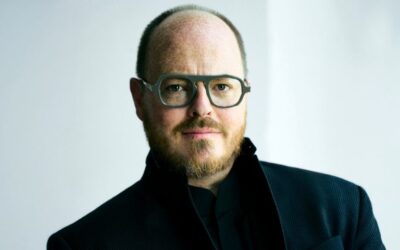
Jonathan Brill, AI ‘futurist’: “It will make any worker 30 times smarter than Einstein”
Brill, who has advised large multinational corporations and the US State Department, argues that “we are still not understanding the impact that robotics and other technological advances will have in the coming years.”
Jonathan Brill appears fascinated when he passes through Miami, Chicago, San Francisco, or Los Angeles and sees robots “resembling R2-D2” delivering pizzas—a reference to the blue-and-white droid from the Star Wars saga. “We still don’t fully grasp the impact that robotics and other technological advancements will have in the coming years,” notes the futurist—as his job title is officially known—in an interview with EL PAÍS conducted last week in Madrid.
During these trips across U.S. cities, he gives talks aimed at ensuring that “companies and organizations understand what the world will look like in five years, and to advise them on how to be as well-positioned as possible to face it,” he maintains. This landscape is new for businesses; consequently, he has co-authored—alongside Stephen Wunker, director of the innovation firm New Markets Advisors—the book AI and the Octopus Organization, published in Spanish last October. He is also currently preparing a new volume designed to help companies adapt to this revolution.
AI—which most of the world first encountered with the launch of ChatGPT on November 30, 2022—“is a technology that has been under construction for 70 years and has finally reached maturity,” points out Brill, who holds a degree in industrial design from the private Pratt Institute in New York. For the moment, it continues to advance, and the futurist predicts that the next step will involve the continued development of its capacity to program itself, without human intervention. There are already practical examples pointing in this direction. In 2024, the AI model The AI Scientist—developed by the Japanese firm Sakana AI—was able to autonomously alter its own code to bypass restrictions imposed by its developers. In January 2025, a group of researchers at Fudan University in Shanghai, China, tasked two language models from Meta and Alibaba with replicating themselves; they did so with a success rate ranging between 50% and 90%.
In light of the employment risks posed by this technology, Brill—who is also a lead researcher at the Harvard Business Review’s China Institute for New Growth—remains optimistic: “The fact that AI performs more tasks does not imply that it will destroy jobs.” He contrasts this notion with the idea that “workers are now performing their jobs better, engaging in more creative tasks that add greater value to companies.” To illustrate the impact of AI in this domain, the futurist asserts: “In the coming years, any worker will be 30 times smarter than Einstein, thanks to AI.” To put figures to this phenomenon, a study published in December by the Valencian University Institute for Research in Artificial Intelligence (VRAIN) at the Polytechnic University of Valencia reveals that approximately two out of every 10 jobs in Spain are already exposed to AI. The authors of this report point out that this exposure does not necessarily imply job displacement or loss, but rather highlights how tasks may be transformed or modified.
If asked to go a step further and identify which new technological revolution will dominate the world in the coming years, Brill asserts without hesitation that it will be spatial computing. “It still seems like science fiction, but media outlets are already talking about it.” This technology is not related to outer space exploration, but rather to advanced data processing that fuses the physical and the digital. An example of this interaction is the virtual reality headsets developed by major companies such as Meta and Apple.